

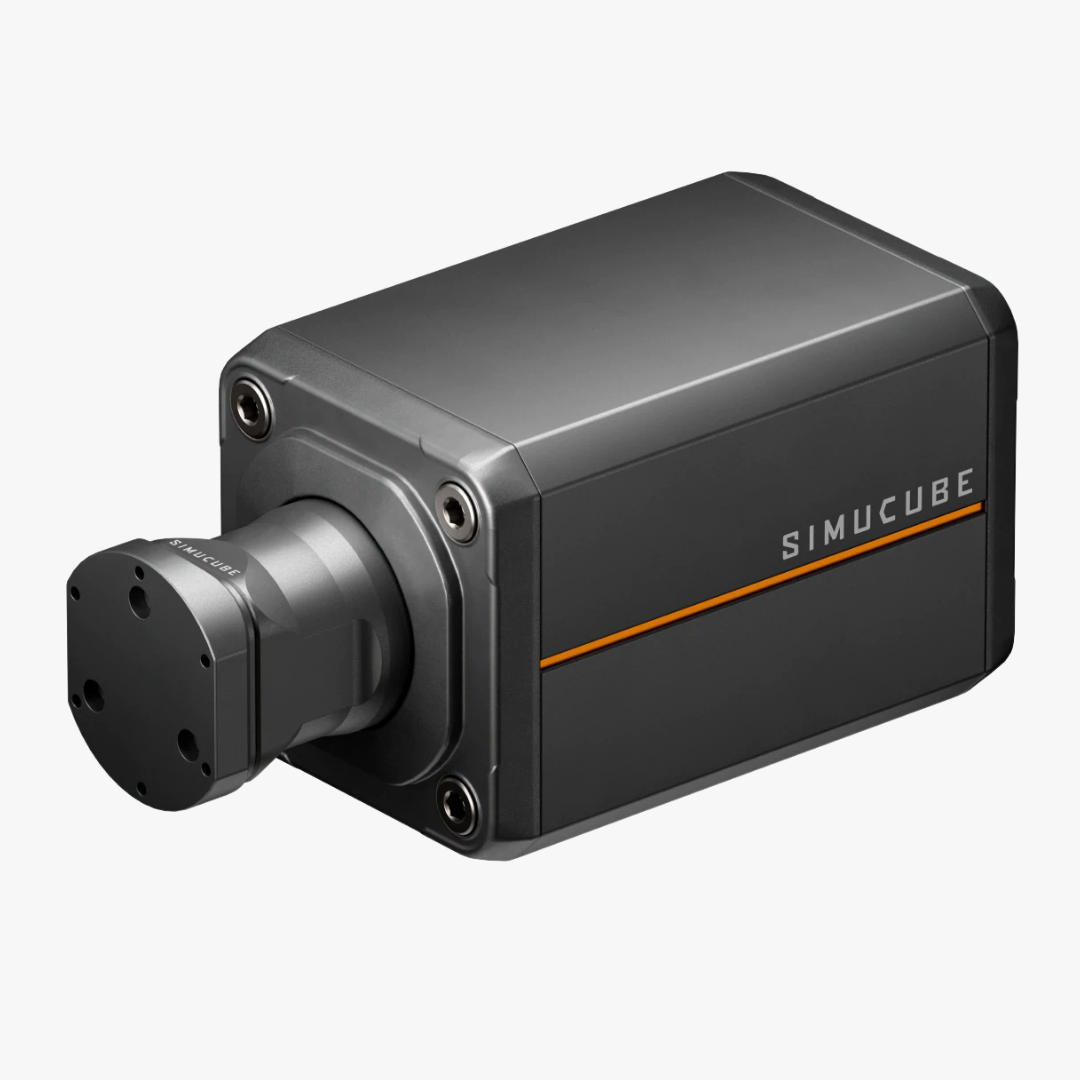
Choosing between direct drive and belt-driven force feedback can be confusing, especially when upgrading from a gaming racing wheel. Both technologies create steering resistance and communicate information from the simulation, but they deliver that force differently.
Understanding the difference can help you decide whether your current belt-driven setup is still suitable or whether a direct drive wheelbase offers something you will genuinely use.
How Do Direct Drive and Belt-Driven Wheelbases Work?
Both wheelbase types produce force feedback, which simulates steering forces based on the game's physics. Their mechanical designs determine how those forces reach your hands.
How Does a Belt-Driven Wheelbase Work?
A belt-driven wheelbase uses a motor connected to the steering shaft through one or more belts and pulleys.
The belt system transfers motor force while allowing manufacturers to change the relationship between motor rotation and steering movement.
A well-designed belt-driven system can deliver smooth and usable force feedback. However, belts introduce mechanical compliance, friction and transmission characteristics that can affect how small force changes reach the wheel.
This does not mean every belt-driven wheel feels inaccurate. Its performance depends on the specific design, condition, settings and simulation.
How Does a Direct Drive Wheelbase Work?
A direct drive wheelbase connects the steering shaft directly to the motor, without a belt or gear transmission between them.
This shorter mechanical path reduces the filtering introduced by transmission components.
It can help the wheelbase reproduce changes in steering force more directly, but motor design, electronics, software and tuning still influence the result.
Direct drive also allows manufacturers to offer different torque capacities, from compact home setups to powerful dedicated simulators.
Direct Drive vs Belt Drive Wheelbase: Key Differences
| Feature | Belt-Driven Wheelbase | Direct Drive Wheelbase |
|---|---|---|
| Force transmission | Motor drives the steering shaft through belts and pulleys | Motor connects directly to the steering shaft |
| Mechanical response | Influenced by belt tension and transmission design | No intermediate belt transmission |
| Force-feedback detail | Can be good, depending on design and calibration | Potentially more direct with less mechanical filtering |
| Torque options | Depend on the specific model | Available across a wide torque range |
| Maintenance | Belts and tension may require inspection over time | No drive belt, but other components still need care |
| Mounting requirements | Depend on model weight and output | Higher-torque models require suitable rigid mounting |
| Buying consideration | Useful when an existing setup meets your needs | Worth evaluating when you need different response or torque headroom |
The important distinction is mechanical design. Neither technology guarantees improved driving performance without appropriate settings and a stable installation.
What Difference Will You Notice While Racing?
The most meaningful difference is how changes in steering force are transmitted to your hands.
A capable direct drive system may communicate rapid force changes with less influence from belts or pulleys. This can be noticeable during kerb contact, transitions in steering load or changes in tyre resistance.
However, the difference is not identical across every wheelbase or racing simulator.
Before judging either technology, consider three things:
- Game settings: Excessive force-feedback strength can reduce detail through clipping.
- Wheelbase tuning: Filters and damping affect how the steering feels.
- Mounting stability: Movement in the wheel deck can change how consistently feedback reaches the driver.
More steering force is not automatically more useful information. A properly configured wheelbase should communicate the forces you need without becoming unnecessarily tiring.
For a broader equipment decision, the best sim racing wheelbase guide explains how torque, ecosystem and mounting requirements affect selection.
What Does a Direct Drive Wheelbase Need Before Installation?
A direct drive wheelbase requires more than a suitable torque rating. Its mounting, steering-wheel connection and supported software must also match your setup.
Stable Mounting
Check that the wheelbase can be installed securely using the manufacturer's approved mounting points.
A rigid wheel deck helps keep the motor housing stable when steering force changes.
You do not necessarily need the largest aluminium-profile cockpit. What matters is whether your mounting system supports the specific wheelbase and force settings.
If your rig moves under steering load, the cockpit rigidity guide explains what to inspect before purchasing replacement hardware.
Compatible Steering Wheel and Quick Release
A wheelbase and racing steering wheel are separate components in many direct drive setups.
Check the mechanical quick release and any electrical connection needed for buttons, displays or paddles.
Compatibility between brands should never be assumed.
The Apex300 Compatibility Guide provides an overview, but confirm exact model requirements and included accessories before ordering.
Correct Software and Safe Force Settings
Install the appropriate manufacturer software and review the wheelbase manual before driving.
Begin with conservative force settings, keep clear of unexpected steering movement and increase strength gradually.
Higher maximum torque requires additional care, especially when inexperienced drivers share a simulator.
Who Should Choose Belt Drive and Who Should Choose Direct Drive?
A belt-driven wheelbase may still be the sensible option if you already own one and enjoy its performance.
Consider keeping it when:
- Its steering feedback remains consistent.
- You are comfortable with its available force.
- Your current mounting arrangement works well.
- Other setup limitations matter more than the wheelbase.
Direct drive becomes worth investigating when your current equipment genuinely limits the experience you want.
Potential reasons include seeking more available torque headroom, a different feedback response or a compatible ecosystem for future upgrades.
How Much Direct Drive Torque Should You Consider?
Torque describes rotational force and is measured in Newton-metres, or Nm.
A higher maximum rating increases available force capacity. It does not automatically guarantee more accurate feedback or faster lap times.
| Wheelbase output | Typical consideration | Important check |
|---|---|---|
| Around 9 Nm | First separate direct drive setup | Secure mounting and wheel compatibility |
| Around 12 Nm | More torque headroom for regular use | Mount rigidity and preferred force levels |
| Around 18 Nm | Higher-capacity dedicated setup | Strong mounting and careful calibration |
| Above 20 Nm | Specialised high-torque requirements | Verified frame capacity and safe settings |
These are illustrative hardware categories, not universal recommendations. Wheel diameter, driver preference and software settings also affect usable steering force.
Which Direct Drive Wheelbase Should You Start With?
Apex300's current Wheel Bases collection focuses on direct drive hardware from Simagic and Simucube. Belt-driven wheelbases are not currently listed there.
For buyers transitioning from belt-driven equipment, two Simagic models illustrate different starting requirements.
Simagic Alpha EVO Sport 9 Nm
Listed price: €449
The Alpha EVO Sport provides 9 Nm maximum torque in the Simagic direct drive ecosystem.
It may suit drivers purchasing their first separate direct drive wheelbase who want to manage cost and mounting requirements.
Simagic Alpha EVO 12 Nm
Listed price: €649
The Alpha EVO increases maximum torque capacity to 12 Nm.
It may suit drivers who want additional headroom while remaining within the same general product family.
These prices reflect Apex300's Finland storefront as checked in October 2026 and may change.
The article which Simagic Alpha EVO to buy explores differences between the 9 Nm, 12 Nm and 18 Nm versions.
For readers considering another brand, the existing Simagic Alpha EVO vs Simucube comparison discusses the earlier Simucube 2 series. Check current Simucube 3 specifications separately.
Final Decision: Which Wheelbase Technology Fits Your Setup?
Direct drive removes the belt transmission and offers a different way to deliver force feedback. Whether upgrading is worthwhile depends on what your current equipment lacks.
Check your existing settings, mounting and compatibility first.
If a direct drive upgrade meets a genuine need, compare torque options, specifications and requirements in the Apex300 Wheel Bases collection before deciding.


Share:
What Is the Ideal Sim Racing Seat Position? 7 Setup Checks