

Quick Answer
Which Simagic Alpha EVO should you buy?
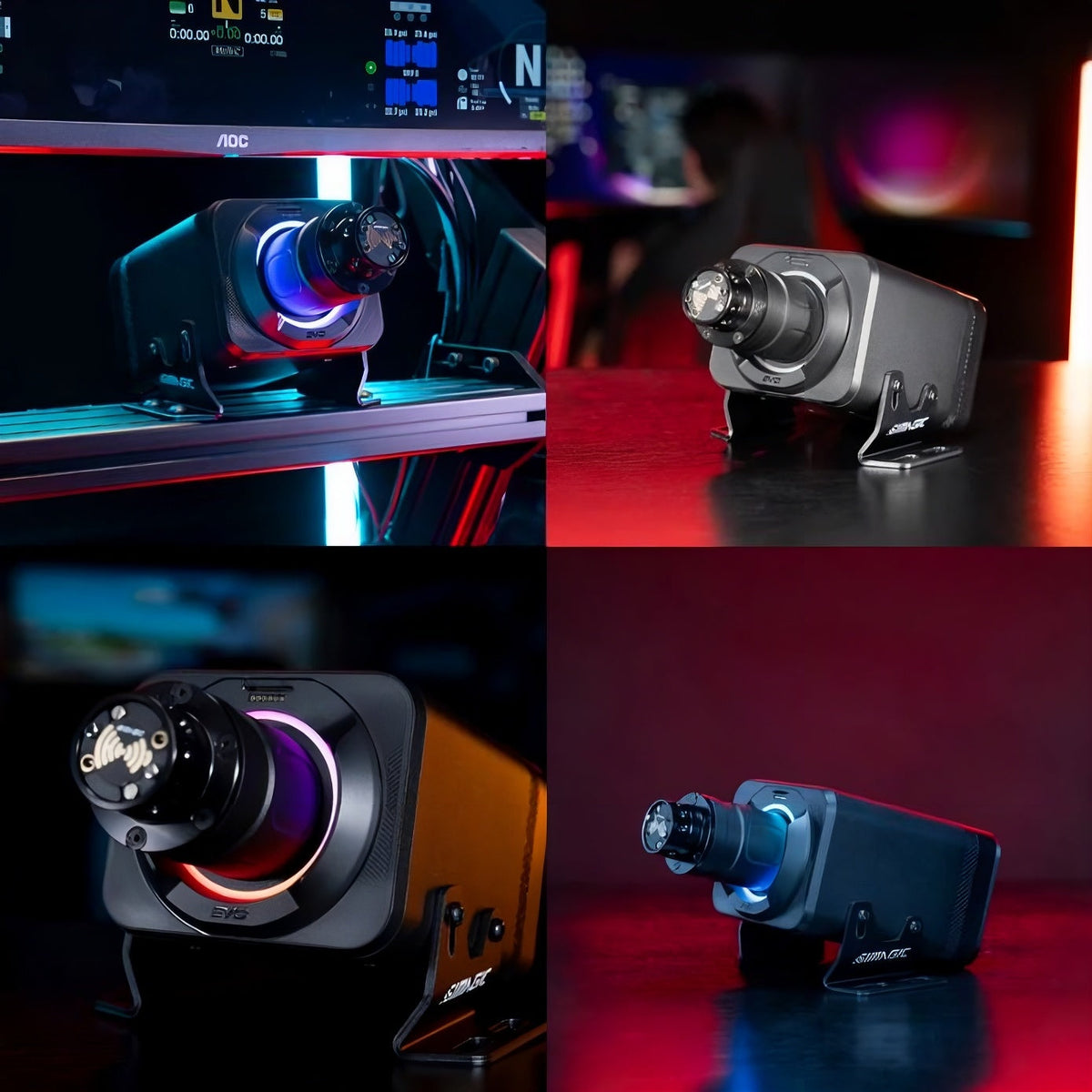
Choose the Alpha EVO Sport (9 Nm) for your first direct drive setup. Choose the Alpha EVO (12 Nm) if you want more headroom and race regularly. Choose the Alpha EVO Pro (18 Nm) only if you are an experienced sim racer with a rigid cockpit. More torque is not automatically the better purchase.

The Simagic Alpha EVO range comes in three models, and the main difference between them is maximum torque - 9 Nm, 12 Nm, and 18 Nm. That single number drives most of the buying confusion. The strongest model is not automatically the right choice. Which Simagic Alpha EVO you should buy depends on your driving experience, your cockpit, your racing discipline, and how much force-feedback headroom you actually need. This guide cuts through the numbers and helps you make the right call.
Simagic Alpha EVO Sport vs EVO vs EVO Pro at a Glance
All three models share the same direct drive technology - no belt, no gear, direct motor-to-shaft connection. They also share a 21-bit encoder, a 20 kHz response rate, and full Simagic quick-release compatibility. The difference is torque ceiling and price.
|
Model |
Maximum Torque |
Best Suited To |
|
Alpha EVO Sport |
9 Nm |
First direct drive setup and value-focused buyers |
|
Alpha EVO |
12 Nm |
Intermediate racers wanting balanced performance and headroom |
|
Alpha EVO Pro |
18 Nm |
Experienced racers with rigid premium setups |
If you are stepping into direct drive for the first time, the table above already narrows your choice significantly. Read on to understand why.
Is the Simagic Alpha EVO Sport 9 Nm Enough for Sim Racing?
Yes. For most beginners and intermediate sim racers, 9 Nm provides enough force-feedback strength and detail for GT, Formula and rally driving.
The Alpha EVO Sport is not a compromise product. Nine Newton-metres of direct drive torque is a substantial step up from any belt-driven or gear-driven wheel. You will feel kerbs, understeer, tyre load shifts, and surface changes in clear detail - the kind of feedback that actually helps you drive better.
For GT racing, 9 Nm covers the full range of what most drivers need. For Formula sim racing, where steering loads are lighter by nature, 9 Nm is often more than enough. Rally sim racers benefit from the quick response of direct drive, and 9 Nm handles that well.
Where 9 Nm starts to feel limiting is when a more experienced driver - already used to direct drive - wants to increase the physical weight of the wheel, run higher FFB multipliers, or extract finer detail at the limit. If you are in that position, you are no longer a beginner buyer and the 12 Nm model is worth considering.
For a first direct drive setup, the Alpha EVO Sport is the sensible, well-priced starting point.
When Does the 12 Nm Alpha EVO Make More Sense?
The 12 Nm Alpha EVO makes sense for racers who want more headroom than the Sport without moving to an 18 Nm premium setup.
The difference between 9 Nm and 12 Nm is not dramatic in everyday use, but it matters at the edges. With 12 Nm, you have more dynamic range - more separation between light steering moments and heavy braking zones, more room to tune force feedback without hitting the ceiling.
The 12 Nm model suits racers who:
- Already have a stable aluminium cockpit and want a wheelbase to match
- Race a mix of GT and Formula disciplines and want consistent feel across both
- Do not want to replace the wheelbase in 12 months when their driving develops
- Run regular league sessions where FFB consistency across long stints matters
It is worth being honest about the decision. If you are buying your first direct drive wheelbase and your cockpit is a wheel stand or a basic aluminium frame, 9 Nm is the smarter buy. The 12 Nm EVO earns its extra cost when the rest of your setup can actually use it.
Who Actually Needs the Alpha EVO Pro 18 Nm?
The 18 Nm Alpha EVO Pro is best suited to experienced sim racers who already have a rigid cockpit and want greater force-feedback range and headroom.
Eighteen Newton-metres is a lot of torque. At full strength it will fight you physically, which is the point - for experienced drivers who want their sim to feel as close to real motorsport as possible, that physical weight is the goal.
The Alpha EVO Pro makes sense for:
- Experienced sim racers who already know direct drive and want a step up
- Drivers building a premium long-term rig around a high-torque wheelbase
- Users who run iRacing or ACC at competitive level and want maximum FFB resolution
- Racers who have outgrown 9 Nm or 12 Nm and know exactly why
It does not make sense for:
- First-time direct drive buyers
- Racers on wheel stands or flexible cockpit frames
- Anyone chasing faster lap times - torque does not directly equal speed
Higher torque does not automatically mean faster lap times. Lap consistency depends on pedals, seating position, cockpit stability, and technique. Eighteen Nm gives you more information and more physical resistance - whether that helps you is determined by your experience level, not the spec sheet.
Does Your Cockpit Change Which Alpha EVO You Should Buy?
Yes - and this point is underestimated by most first-time direct drive buyers.
At 9 Nm, a solid wheel stand or basic aluminium cockpit handles the forces without significant flex. Force feedback transfers cleanly, the setup stays stable, and the experience is what the wheelbase was designed to deliver.
As torque increases, cockpit rigidity becomes more important. At 12 Nm you start to notice flex in lighter frames - small movements in the mounting that absorb force feedback before it reaches your hands. At 18 Nm, a flexible cockpit actively degrades the experience. You paid for 18 Nm of feedback; a flexy frame turns it into 12 Nm of vague force and a vibrating desk.
A rigid aluminium profile cockpit - the kind sold by Sim-Lab, Trak Racer, and Sabelt - is strongly recommended for the Alpha EVO Pro. For the Sport and the standard EVO, a quality wheel stand or mid-level cockpit works well.
Before upgrading to a higher torque wheelbase, check whether your sim racing cockpits can support it properly. A cockpit upgrade alongside a wheelbase upgrade is often the better investment.
Which Simagic Alpha EVO Should You Choose?
Choose the Alpha EVO Sport if:
- This is your first direct drive wheelbase
- You want strong force feedback at good value
- Your cockpit is a wheel stand or entry-level frame
- You do not need large torque headroom right now
Choose the Alpha EVO if:
- You want more headroom than 9 Nm without going premium
- You race regularly across multiple disciplines
- You have a stable aluminium cockpit
- You want a wheelbase you will keep for several years
Choose the Alpha EVO Pro if:
- You are an experienced sim racer who knows what 18 Nm means
- You already have a rigid cockpit that can handle high torque
- You are building a premium long-term setup
- Torque headroom and maximum FFB detail are your priority
You can compare all available Simagic wheelbases at Apex300, or browse the full wheel bases collection to see how the Alpha EVO range sits alongside Simucube and Moza options.
Buying a Simagic Wheelbase in Finland and Europe
Apex300 is based in Lohja, Finland, and ships Simagic wheelbases directly across Europe - including Germany, Netherlands, Belgium, and France - from a central European warehouse. Dispatch is 1–3 business days on in-stock items, with standard EU delivery in 3–7 business days.
All three Alpha EVO models are available with full EU VAT included in the displayed price. Payment options include Klarna buy now pay later, iDEAL for Netherlands buyers, Bancontact for Belgium, BLIK for Poland, and standard card and digital wallet options across all markets.
If you are unsure which Alpha EVO suits your current setup, contact the Apex300 team at hello@apex300.com - advice on compatibility, cockpit matching, and model selection is part of the service.


Share:
What Is the Best Sim Racing Bundle for Your Budget and Discipline?
Top 7 Best Sim Racing Seats: Comfort, Rigidity, & Long Racing Sessions