

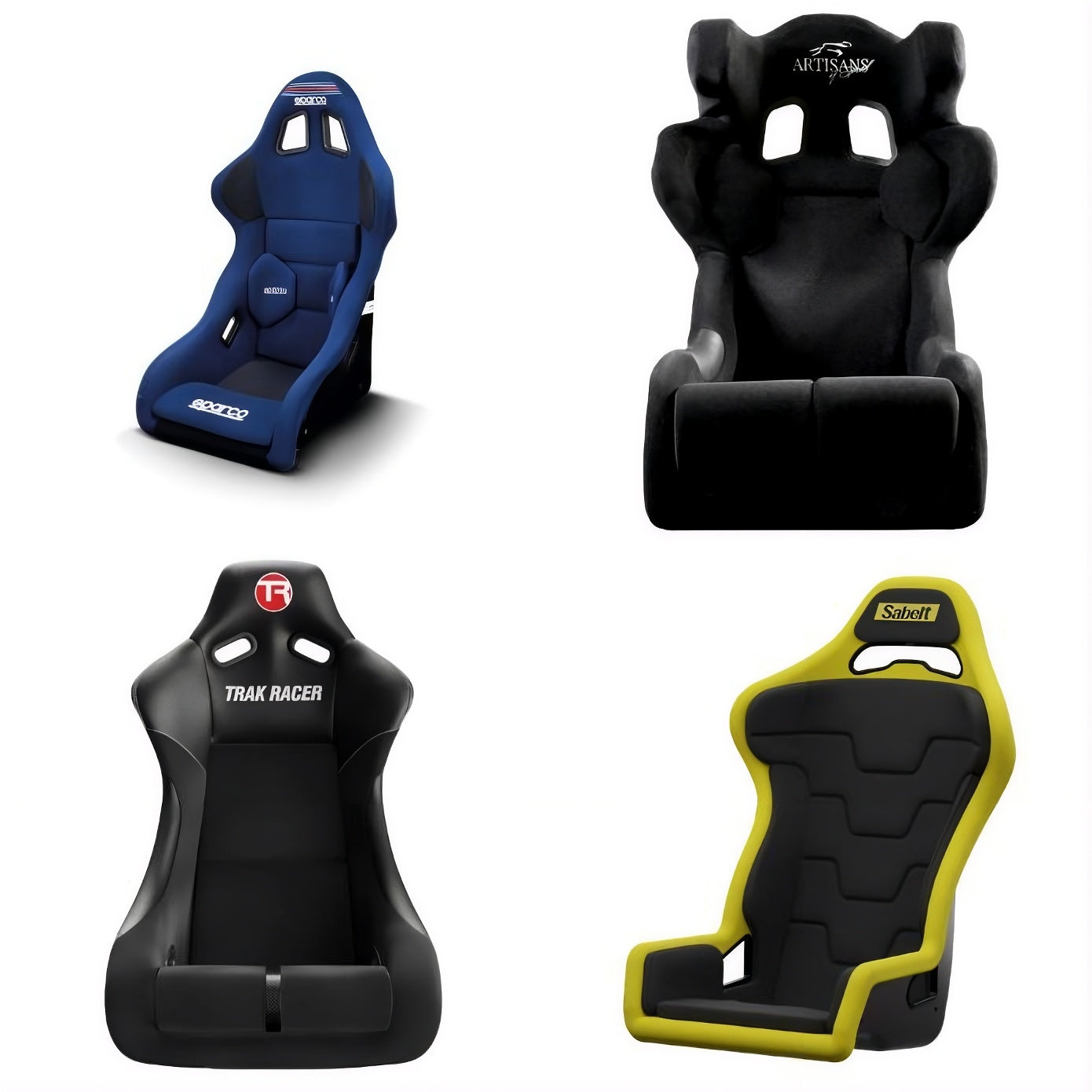
QUICK ANSWER : The best sim racing seat keeps your body stable without becoming uncomfortable during longer sessions. Fixed fibreglass or racing-shell seats provide the most rigidity, while reclining seats offer more adjustability. For endurance racing, body fit, pressure support and heat management matter as much as the seat's overall stiffness. No single seat suits every driver or every rig.

What Makes a Sim Racing Seat Good for Long Sessions?
Three things separate a seat that works well for long sessions from one that causes discomfort after an hour. The first is correct body fit. Side bolsters that press too firmly into your hips or thighs create pressure points that build up over time. The second is seat rigidity. A seat that flexes under lateral load from your steering inputs causes your body to compensate constantly, which adds fatigue. The third is heat management. Foam retains body heat over time, and a seat with no airflow becomes noticeably warmer during races lasting two hours or more.
Mounting stability plays a role too. A seat that moves on its brackets transfers none of its rigidity to your driving position. Getting the seat angle correct on your cockpit matters as much as the seat itself.
Top 7 Best Sim Racing Seats at a Glance
Browse the full sim racing seat collection at Apex300 to see all options currently in stock.
|
Seat |
Type |
Best For |
Main Strength |
|
Artisans of Speed C2 Cold Fusion |
Fixed, ventilated |
Long and endurance sessions |
Cooling fans and enclosed GT support |
|
Artisans of Speed C1-XL Cold Fusion |
Fixed, ventilated |
Larger body fit |
30mm more hip and base room than C1 |
|
Artisans of Speed C1 Cold Fusion |
Fixed, ventilated |
Standard touring fit |
Active cooling in compact fixed shell |
|
Trak Racer GT Rally-Pro Fixed Fibreglass |
Fixed fibreglass |
First rigid seat upgrade |
Strong value for fixed-seat entry |
|
Trak Racer Recliner Seat |
Reclining |
Casual and shared rigs |
Adjustability and easy entry and exit |
|
Sparco PRO 2000 QRT Martini Gaming |
Fixed racing shell |
Serious GT-style cockpits |
Deep shell and tight shoulder support |
|
Sabelt SRS-1 Racing Black |
Fixed fibreglass |
Direct-drive endurance rigs |
High rigidity and minimal shell flex |
Artisans of Speed C2 Cold Fusion Sim Racing Seat
Best for: long GT and endurance sessions
The Artisans of Speed C2 Cold Fusion Sim Racing Seat is the most capable option on this list for drivers who spend significant time in the rig. It uses four built-in cooling fans and an airflow mesh structure to move air through the seat during use. This directly addresses the heat build-up that becomes a factor in sessions lasting two hours or more.
The C2 uses an enclosed GT-style shell that wraps around the shoulders and hips more fully than an open-sided racing seat. This gives more lateral support in corners without requiring the side bolsters to squeeze the driver in. For endurance sim racing, where staying in a consistent position matters across longer stints, the C2 is the strongest fixed seat on this list.
2. Artisans of Speed C1-XL Cold Fusion Sim Racing Seat
Best for: drivers who find standard racing shells too narrow
The C1-XL is the wider variant in the Artisans of Speed Cold Fusion range. It provides 30mm more hip and base room than the C1. Drivers with a broader build who have previously found fixed racing seats uncomfortable due to bolster pressure will find the C1-XL a more practical fit.
The active cooling system is the same as the C2: four built-in fans with airflow mesh. This makes it a strong option for larger drivers who also want the long-session ventilation benefit without moving to a reclining seat to get the space they need.
3. Artisans of Speed C1 Cold Fusion Sim Racing Seat
Best for: standard body fit with active cooling
The C1 is the compact option in the Cold Fusion range. It suits drivers with a standard shoulder and hip width who want the active cooling system in a lighter, more space-efficient shell. The fixed support and racing posture are the same as the C2, but the shell is narrower and works better in tighter cockpit configurations.
For regular long sessions where cooling matters but the wider C2 or C1-XL shell is more than needed, the C1 is a practical and well-specified choice.
4. Trak Racer GT Rally-Pro Fixed Fibreglass Sim Racing Seat
Best for: first-time fixed seat buyers
The Trak Racer GT Rally-Pro is a fixed fibreglass seat suited to drivers moving from a gaming chair or reclining seat to their first proper racing shell. Fibreglass construction gives it the rigidity that foam-padded adjustable seats cannot match, at a lower price point than premium motorsport shells.
It provides stable support for the hips and lower back, and its standard mounting pattern is compatible with most aluminium sim cockpit frames. For drivers ready to commit to a fixed seating position on a dedicated cockpit, this is the natural starting point.
5. Trak Racer Recliner Seat
Best for: casual racers and shared sim rigs
Not every sim racing setup is a dedicated single-driver cockpit. The Trak Racer Recliner Seat suits rigs used by more than one driver, or setups where the seat doubles for other use. It uses a tubular steel frame, high-density foam and a reclining mechanism that allows backrest angle adjustment without tools.
It is less rigid than a fixed fibreglass shell under hard braking, but it offers noticeably easier entry and exit and the ability to adjust the seating angle for different body types. For casual sessions and shared rigs, it is a practical and comfortable option.
6. Sparco PRO 2000 QRT Martini Gaming
Best for: GT-style cockpit users wanting motorsport-level support
The Sparco PRO 2000 QRT Martini Gaming is a fixed racing shell from a manufacturer with a long history in real motorsport seating. The PRO 2000 QRT has a deeper shell and tighter shoulder area than the standard REV QRT, which gives more upper-body lateral support during sustained cornering inputs.
It is best suited to drivers with a dedicated cockpit and a stable direct-drive setup who want the feel of a genuine motorsport shell without modifying their rig significantly. The mounting pattern follows standard sim cockpit bracket sizing.
7. Sabelt SRS-1 Racing Black
Best for: high-rigidity direct-drive and endurance rigs
The Sabelt SRS-1 Racing Black is a fixed fibreglass seat designed around rigidity above all else. The shell flex is minimal, which matters most when paired with a strong direct-drive wheelbase and heavy load cell pedal inputs. Any seat movement under those forces breaks the stable position that consistent braking requires.
For endurance sim racers who are already set up with a rigid aluminium cockpit and high-end hardware, the SRS-1 delivers the stable posture needed for multi-hour sessions without introducing the flex that lighter shells can show over time.
Fixed Seat or Sim Racing Chair: Which Should You Choose?
The choice between a fixed bucket seat and a sim racing chair depends on how you use the rig, not which looks more serious.
|
Factor |
Fixed Bucket Seat |
Sim Racing Chair |
|
Rigidity |
High, minimal flex under load |
Lower, some movement under hard inputs |
|
Long-session comfort |
Depends on fit and ventilation |
Depends on padding and foam quality |
|
Cockpit compatibility |
Needs brackets, standard mount |
Often easier to position and adjust |
|
Multiple drivers |
Less practical without sliders |
Easier to adjust between users |
|
Braking stability |
Better stable position under load |
May shift slightly on hard pedal inputs |
|
Best for |
Dedicated single-driver rigs |
Casual, shared or multi-purpose setups |
If you are still deciding between seat types, the guide on racing gaming seats covers the differences in more detail.
Which Seat Works Best for Long and Endurance Racing?
For drivers specifically planning endurance sessions of two hours or more, four seats on this list stand out for different reasons.
The C2 Cold Fusion is the strongest overall option for long sessions due to its active cooling system, which reduces heat build-up at contact points across extended time in the rig.
The C1-XL suits drivers who need more room. A seat that is too narrow for your body creates pressure points that become progressively more uncomfortable as a session extends.
The Sabelt SRS-1 and Sparco PRO 2000 QRT both suit drivers who prioritise rigidity in a high-end static rig. Their strength is minimising seat movement under heavy inputs, which reduces the physical effort of maintaining consistent position.
What Should You Check Before Buying a Sim Racing Seat?
Before ordering any seat from this list, confirm these points against your specific cockpit and body measurements.
Measure your hip width and shoulder width first. Most seat specifications list these clearly. Buying the wrong size is the single most common mistake.
Check your cockpit mounting pattern. Most fixed seats require side brackets. Confirm whether your cockpit frame supports standard bracket sizing, and whether sliders are needed for pedal reach adjustment.
Check the available space in your rig. Some shells are taller or wider at the base than others. Measure the internal space of your cockpit before ordering.
For broader guidance on how seat choice fits into a full rig build, the complete sim racing setup guide covers cockpit configuration step by step.
If you want to understand which seat type matches your experience level and session length before deciding, the which sim racing seat should you buy guide walks through the full decision.
The full sim racing equipment collection at Apex300 includes cockpit frames, brackets and accessories that work alongside all seven seats on this list.
Apex300 ships from Lohja, Finland. In-stock items dispatch within one to three business days. EU delivery takes three to seven business days. Returns are accepted within 14 days for unused items. Klarna is available at checkout and all prices include VAT.


Share:
Simagic Alpha EVO Sport vs Alpha EVO vs Alpha EVO Pro: Which Wheelbase Should You Buy?
What Should You Upgrade First in a Sim Racing Setup? 2026 Guide