

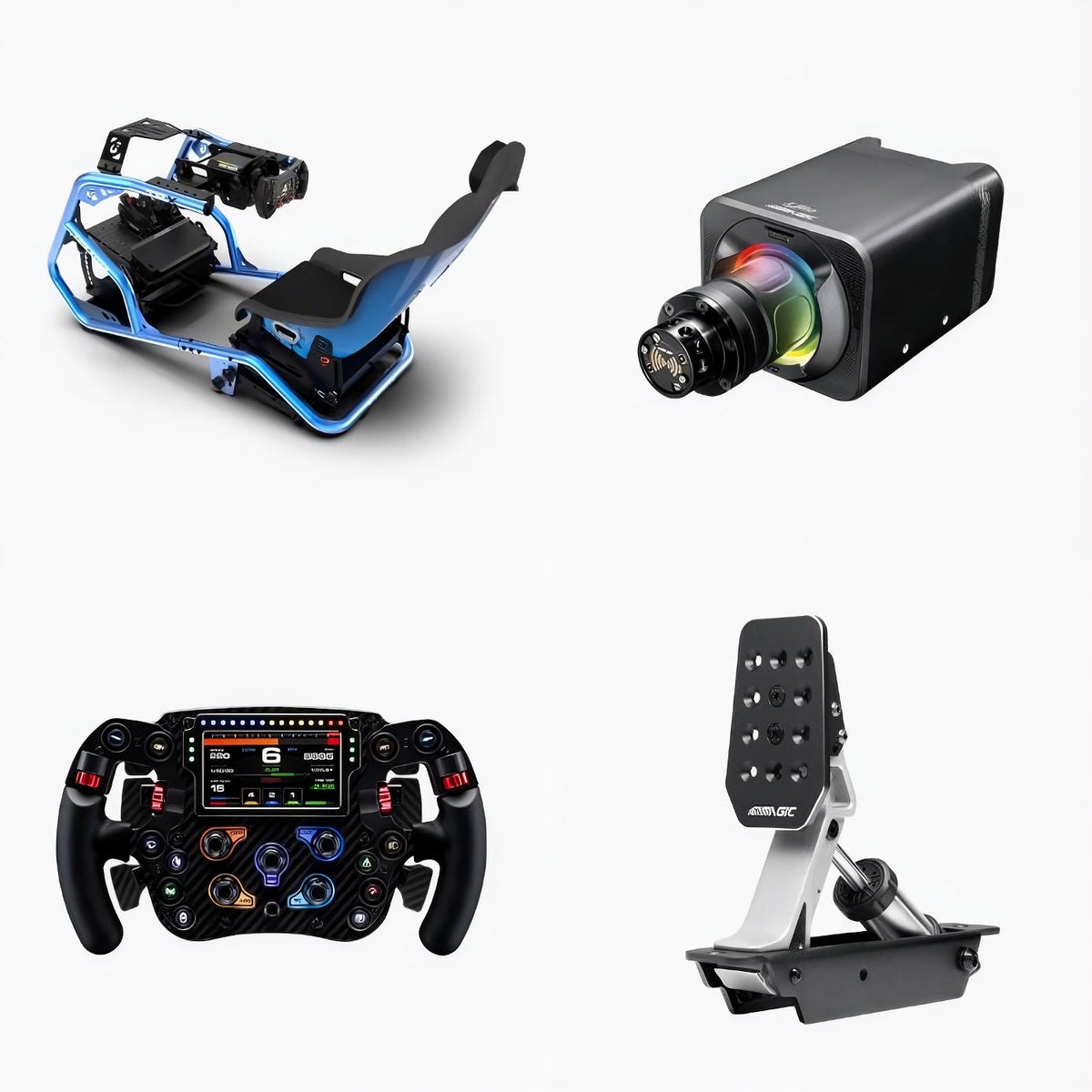
Quick Answer: The best first sim racing upgrade is the part currently limiting consistency or stability. For many drivers, a rigid cockpit or better pedals should come before a higher-torque wheelbase. Fix the weak point first, then build the rest of the setup around compatible hardware.

A sim racing setup does not need to be replaced all at once. Upgrading in the right order can produce a better result than spending most of the budget on one high-end component while the rest of the rig still limits it.
The right upgrade depends on your current hardware, racing discipline, available space and the part of the setup that is holding you back. This guide explains how to decide whether your next upgrade should be the cockpit, pedals, wheelbase, steering wheel or an accessory.
How Do You Know What to Upgrade First?
Start by identifying the weakest part of your current setup rather than choosing the product with the largest specification number.
- Does the desk, stand or seat move under braking or force feedback?
- Is braking difficult to repeat consistently?
- Does the wheelbase feel weak or lack useful feedback?
- Are your current components compatible with future upgrades?
- Is your seating position uncomfortable during longer sessions?
- Do you need a shifter, handbrake or additional mounting hardware for the type of racing you drive?
If you are still planning a complete system, start with the Sim Racing Gear collection to see how the main categories fit together.
Sim Racing Upgrade Order at a Glance
|
Priority |
Upgrade |
Best When |
Main Benefit |
|
1 |
Cockpit or stable mounting |
Your desk or stand moves |
Better stability and repeatable controls |
|
2 |
Pedals |
Braking is inconsistent |
Better brake control and repeatability |
|
3 |
Direct drive wheelbase |
Current feedback feels limited |
More detailed and responsive force feedback |
|
4 |
Steering wheel |
You need discipline-specific controls |
Better ergonomics and control layout |
|
5 |
Shifter or handbrake |
You race rally, drift or manual cars |
More appropriate vehicle controls |
|
6 |
Accessories |
Core hardware is already sorted |
Better comfort, mounting and organisation |
This is a practical order, not a fixed rule. The correct first upgrade is still the component that solves the biggest problem in your current setup.
Should You Upgrade the Cockpit First?
A cockpit should usually come first when your desk, wheel stand or seat moves during braking or force feedback. Stronger hardware cannot perform consistently if the mounting platform flexes or changes position.
When comparing sim racing cockpits, look at wheelbase mounting support, pedal deck rigidity, seating position, adjustment range, available space and future accessory mounting.
Should Pedals Be Your First Performance Upgrade?
For many drivers, yes. Better pedals can make braking easier to repeat because the driver can build more consistent muscle memory around brake input. If your current wheelbase still provides useful feedback but braking changes from lap to lap, pedals can be the more useful first upgrade.
Browse sim racing pedals and compare brake technology, adjustability, mounting requirements and two-pedal versus three-pedal layouts.
For a deeper pedal comparison, read the Sim Racing Pedals Buying Guide for Europe.
When Should You Upgrade to a Direct Drive Wheelbase?
Upgrade the wheelbase when the rig is stable, the pedals are working consistently and steering feedback has become the main limitation. A direct drive wheelbase can provide faster and more detailed force feedback, but additional torque only helps when the mounting platform can support it.
Compare available wheel bases by torque level, ecosystem, mounting requirements and compatibility with the steering wheel you plan to use.
Before mixing components, check the Apex300 Compatibility Guide.
Do You Need a New Steering Wheel at the Same Time?
Not always. A new steering wheel makes sense when it solves a specific need, such as a different rim shape, more controls or a layout better suited to Formula, GT, rally or endurance racing.
Browse steering wheels by discipline and ecosystem rather than choosing only by appearance.
When Should You Add a Shifter or Handbrake?
Shifters and handbrakes are usually later upgrades because they are discipline-specific. They become more important for rally, drift, historic racing and manual road-car simulations than for drivers who mainly use paddle-shift Formula or GT cars.
Explore shifters and handbrakes once the core controls are working well.
Which Sim Racing Accessories Should You Upgrade Last?
Accessories normally come after the cockpit, pedals, wheelbase and wheel are working together correctly. Monitor mounts, seat adjustment hardware, cable management, quick-release parts and additional mounting hardware can improve comfort and organisation without replacing the core setup.
What Should a Beginner Upgrade First?
A beginner should first fix whichever part prevents consistent driving. If the setup moves, improve the mounting. If braking is difficult to repeat, upgrade the pedals. If the cockpit and pedals already work well but the steering feedback feels limited, move to a direct drive wheelbase.
Practical beginner order: Stable mounting -> Better pedals -> Direct drive wheelbase -> Steering wheel -> Discipline-specific controls -> Accessories.
What Should an Experienced Sim Racer Upgrade First?
Experienced drivers should focus on a specific limitation rather than replacing complete categories. Common examples include cockpit flex at higher torque, insufficient pedal adjustment, limited wheelbase range, missing endurance controls, poor monitor positioning or discomfort during long sessions.
Does a Higher-Torque Wheelbase Always Make the Biggest Difference?
No. Torque is only one part of a complete sim racing system. A high-torque base on an unstable rig can be less useful than a lower-torque base mounted to a rigid cockpit with predictable pedals.
Think of the setup as one connected system: cockpit stability + pedal consistency + force feedback + steering controls + driving position.
How Should You Plan a Sim Racing Upgrade Without Wasting Money?
1. Identify the problem: Upgrade because the current hardware limits you, not simply because a newer product exists.
2. Check compatibility: Confirm mounting, wheelbase ecosystem, quick release, pedal connection and cockpit support.
3. Think one upgrade ahead: Choose today's component with future wheelbase, pedal or cockpit requirements in mind.
4. Upgrade the limitation first: Fix instability before adding torque and fix inconsistent braking before cosmetic accessories.
5. Keep the setup balanced: A well-matched system can be more useful than one premium component surrounded by hardware that cannot support it.
For a broader overview, read the Complete Sim Racing Gear Guide.
Buying Sim Racing Upgrades in Europe
Apex300 is based in Finland and serves sim racing customers across European markets including Germany, the Netherlands, Belgium and France. Before ordering an upgrade, check compatibility, mounting requirements, delivery information and return conditions so the new component fits the rest of the setup.
Final Answer: What Should You Upgrade First in Sim Racing?
The first sim racing upgrade should be the component that currently limits consistency or stability. For many drivers, that means improving the cockpit or pedals before moving to a stronger direct drive wheelbase. Once the foundation is stable, upgrade the wheelbase, steering wheel and discipline-specific controls in an order that matches how you actually race.
Explore the Apex300 Sim Racing Gear collection to compare the core categories used to build and upgrade a complete setup.


Share:
Top 7 Best Sim Racing Seats: Comfort, Rigidity, & Long Racing Sessions
Which Trak Racer Accessories Do You Actually Need for a Sim Racing Cockpit?