

A comfortable sim racing setup begins with how you sit, not the price of your equipment. Stretching towards the pedals, lifting your shoulders to steer or sliding backwards under braking can make even a sturdy cockpit feel awkward. The right sim racing seat position supports your body while keeping the controls within natural reach. Try these seven practical checks before considering an upgrade.

What Makes a Good Sim Racing Seating Position?
A suitable position lets you brake firmly, steer naturally and view your monitor without leaning forward. Your seat should remain stable under normal driving inputs.
Focus on these three factors:
- Body support: Your back and hips remain supported.
- Control reach: You can operate the wheel and pedals without stretching.
- Stability: The seat and mounting hardware stay secure.
Body proportions and cockpit designs vary, so copying another driver's measurements may not work for you.
Seven Checks to Improve Your Sim Racing Seat Position
1. Start With Seat Height and Stability
Sit naturally and check your height relative to the steering wheel and pedals. Your shoulders should remain relaxed, with sufficient clearance around your knees.
On an adjustable sim racing cockpit, follow the manufacturer's instructions when changing bracket height or seat angle.
2. Adjust the Backrest for Proper Support
Support your hips and lower back without forcing an extreme reclining angle.
Adjustable recliners let you change the backrest angle. Fixed racing shells depend more on their shape and mounting position. If your shoulders leave the backrest while steering, check wheel distance before replacing the seat.
3. Check the Distance Between Your Seat and Pedals
Press your brake as firmly as you normally would.
Your knee should remain slightly bent without your hips sliding forward or back lifting away from the seat.
If your leg straightens completely, reduce the distance where possible. If your knees feel cramped, increase it gradually.
4. Find a Comfortable Steering Wheel Reach
Hold the wheel at nine and three o'clock, keeping your elbows comfortably bent.
Turn the wheel through your normal steering range. Avoid leaning forward or lifting your shoulders.
Adjust wheel distance if necessary, then check that your pedal position still feels natural.
5. Check Steering Wheel Height and Knee Clearance
Your wheel should not force your shoulders upwards or obstruct comfortable leg movement.
Check the space around your knees while turning. Small wheel-mount adjustments may solve the problem without changing your seat position.
6. Check the Seat Mounting and Brackets
While stationary, apply normal brake pressure and check whether your seat, slider or mounting brackets move.
Loose mounting hardware can affect positioning. Inspect components according to the manufacturer's instructions before further use.
Explore compatible seat accessories if your setup requires mounting or adjustment hardware.
7. Test Your Position During a Normal Racing Session
Drive a familiar session and notice whether your shoulders, knees or lower back become uncomfortable.
Make one adjustment at a time rather than changing everything together.
A suitable position should let you operate the controls consistently without repeatedly shifting your body.
GT vs Formula: Should Your Seat Angle Change?
GT-style setups generally use a more upright driving position, while Formula-style layouts usually place the driver lower and further reclined, often with raised pedals.
Neither arrangement is automatically better.
Your final position should match the cockpit geometry, steering-wheel reach and pedal placement. Avoid changing the seat angle without checking the other controls.
Common Seat Position Problems and Practical Fixes
| Problem | What to check | Practical solution |
|---|---|---|
| Leg straightens when braking | Pedal distance | Move the seat or pedals closer |
| Shoulders leave the backrest | Steering-wheel reach | Bring the wheel closer if possible |
| Knees hit the wheel mount | Wheel height | Adjust the mount safely |
| Seat slides under braking | Slider lock and fasteners | Inspect mounting hardware |
| Back feels unsupported | Seat angle and fit | Adjust support or reassess seat fit |
Try correcting the setup before assuming you need another seat.
When Should You Adjust or Replace Your Sim Racing Seat?
Adjustment is usually the first step when your existing seat fits your body but the controls feel misaligned.
However, a different seat may be worth considering when body fit, backrest support or adjustment limitations cannot be resolved.
Use the seat fit and compatibility guide before choosing replacement hardware.
Two Sim Racing Seat Examples for Different Positioning Needs
These are practical examples of how seating design affects adjustment and support, rather than a ranking of the best products.

Trak Racer Recliner Seat
€179.00€229.00
The Trak Racer Recliner Seat uses a tubular steel frame, high-density foam padding and a handle-operated reclining mechanism. Its adjustable backrest can help users change their seating angle without replacing the entire seat.
Key features
- Adjustable reclining backrest
- Tubular steel frame and supportive foam
- Leather-style upholstery
- Bottom-mount installation with suitable brackets
Suitable for: Shared sim racing setups, drivers who want reclining adjustment and users transitioning to a dedicated cockpit.
Before buying: Check the required bottom-mount bracket, available space and cockpit compatibility.
Check specifications
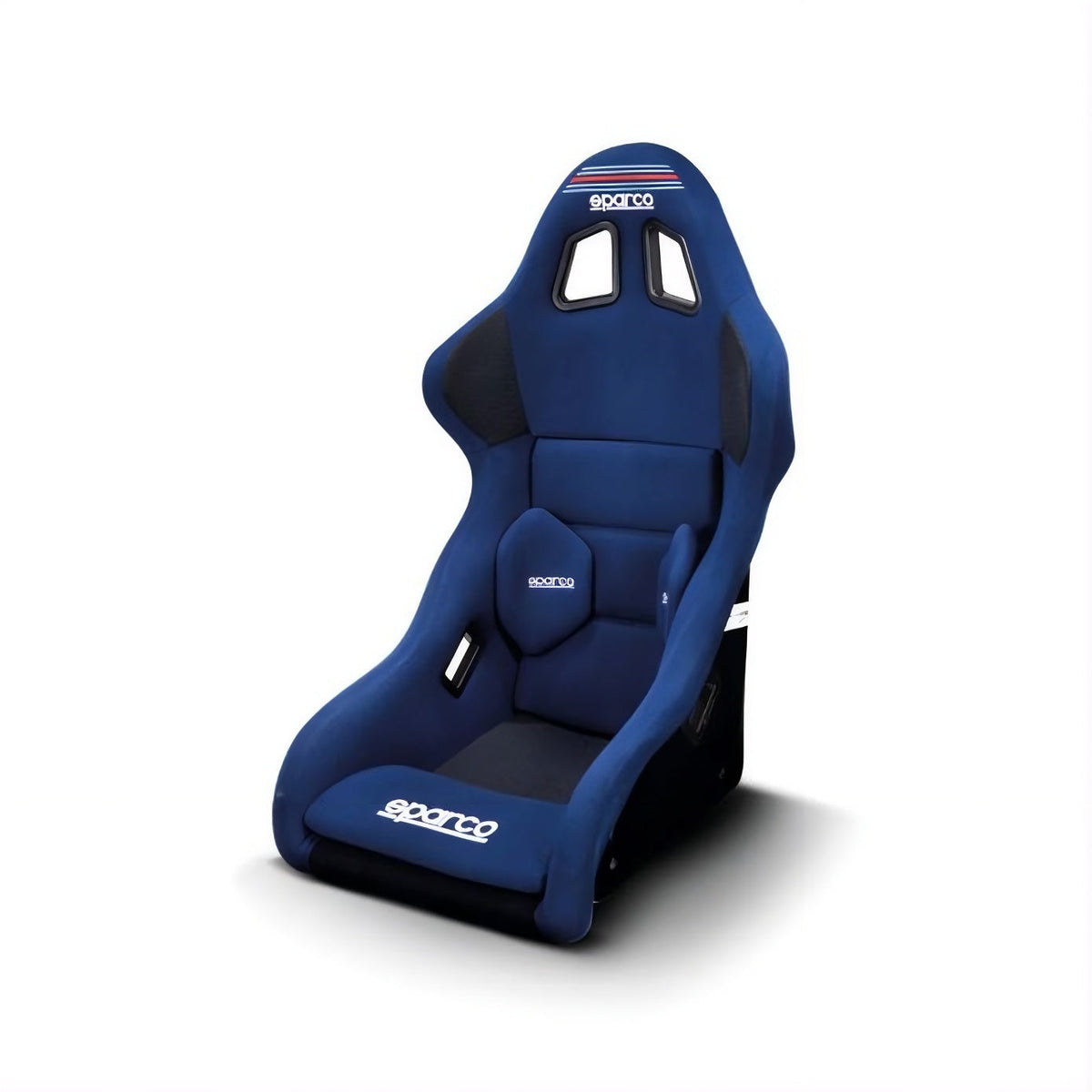
Sparco PRO 2000 QRT Martini Gaming
€449.00€649.00
The Sparco PRO 2000 QRT Martini Gaming uses a lightweight fibreglass shell based on Sparco's motorsport-inspired PRO 2000 design. Unlike a reclining seat, its backrest angle is fixed relative to the shell.
Key features
- Lightweight QRT fibreglass construction
- Fixed racing-style shell
- Motorsport-inspired body support
- Martini Blue and Martini Grey options
Suitable for: Dedicated sim racing cockpits where a fixed seating position and supportive shell are priorities.
Before buying: Verify body dimensions, mounting brackets and available cockpit space. This Gaming seat is intended for simulators, not real vehicles.
Check specificationsPrices checked on the Finland storefront in October 2026. Prices and availability may change.
Which Design Should You Consider?
A recliner provides backrest flexibility, while a fixed shell offers a predefined racing-seat shape. Neither is automatically more comfortable for every driver. Check fit and mounting before replacing equipment.
Browse the full sim racing seats collection to compare available specifications.
Final Check Before Your Next Race
The right seating position should help you steer and brake without repeatedly adjusting your posture. Start with the seven checks, test changes gradually and only consider different equipment when adjustments cannot resolve the underlying problem.


Share:
Sim Racing Cockpit Compatibility: How to Match Your Wheelbase, Pedals and Seat