

|
QUICK ANSWER: Choose a racing steering wheel by matching wheel type to your racing discipline first - GT, Formula, or round. Then check size, controls, and compatibility with your wheelbase before buying. The wrong wheel does not just feel off; it can be genuinely incompatible with your setup. |

Choosing a racing steering wheel feels straightforward until you start looking at the options. Different shapes, sizes, button layouts, and compatibility requirements mean there is a real chance of buying the wrong one. This guide walks through every decision you need to make - wheel type, size, features, and compatibility - so you can choose with confidence.
What Should You Consider When Choosing a Racing Steering Wheel?
Before looking at specific products, you need to answer six questions:
● What type of racing do you drive? GT, endurance, Formula, open-wheel, rally, and drift all feel natural with different wheel shapes. Your primary racing discipline is the starting point.
● What wheelbase do you have or plan to buy? This is the most important practical question. Not every steering wheel works with every wheelbase. Quick-release systems, electrical connections, and feature support vary between manufacturers.
● What size wheel do you prefer? Smaller diameter wheels require more input per corner. Larger diameter wheels require less. Which suits you depends on your racing style and cockpit setup.
● How many controls do you actually use? A wheel with 20 buttons is not always better than one with 8. Consider what you genuinely need to access while driving — paddle shifters, rotary encoders, clutch bites, brake bias.
● Do you need a quick-release system? If you switch wheels regularly or need to remove the wheel easily, a quick-release matters. Some wheels include it; others require a separate purchase.
● What is your budget and upgrade path? Higher-priced wheels often use better materials and better ecosystem integration. If you plan to upgrade your wheelbase later, check whether the wheel ecosystem carries across.
Choose the Wheel Type Based on Your Racing Style
The shape of your steering wheel should reflect the cars you drive most.
|
Wheel Type |
Shape |
Typical Use |
Key Characteristic |
|
GT |
Flat-bottom or D-shape |
GT3, GT4, endurance, touring |
Multiple grip positions, accessible controls |
|
Formula |
Open-top / compact |
F1, open-wheel, prototype |
Dense control layout, compact size |
|
Round |
Full circle |
Rally, drift, road car, mixed driving |
Full rim for varied hand positions |
GT Steering Wheels
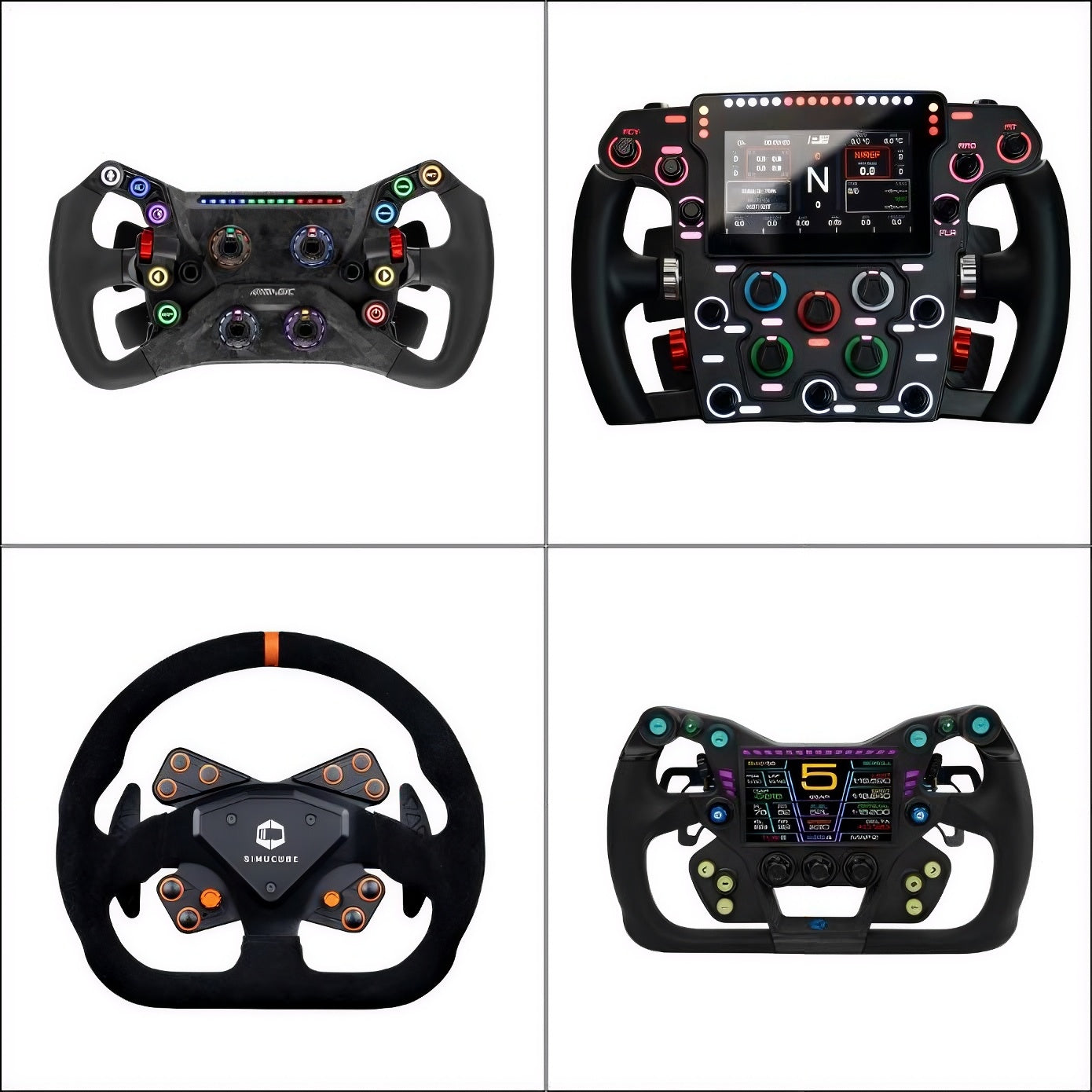
GT-style wheels suit the majority of sim racers who drive circuit-based racing - GT3, GT4, endurance events, touring cars, and road car simulations. The flat-bottom or D-shaped rim gives a natural driving position in a cockpit seat, and the button layout is typically spread across both sides for access without repositioning your hands.
If most of your time is in iRacing GT3 classes, Assetto Corsa Competizione, or similar GT-focused titles, a GT wheel is the natural choice.
|
→ Browse GT Steering Wheels The Simagic GT Neo is a GT-style wheel with paddle shifters, designed for Simagic wheelbases. The Cube Controls GT-X2 is a 300mm CNC-machined aluminium GT option at a higher price point. |
Formula Steering Wheels
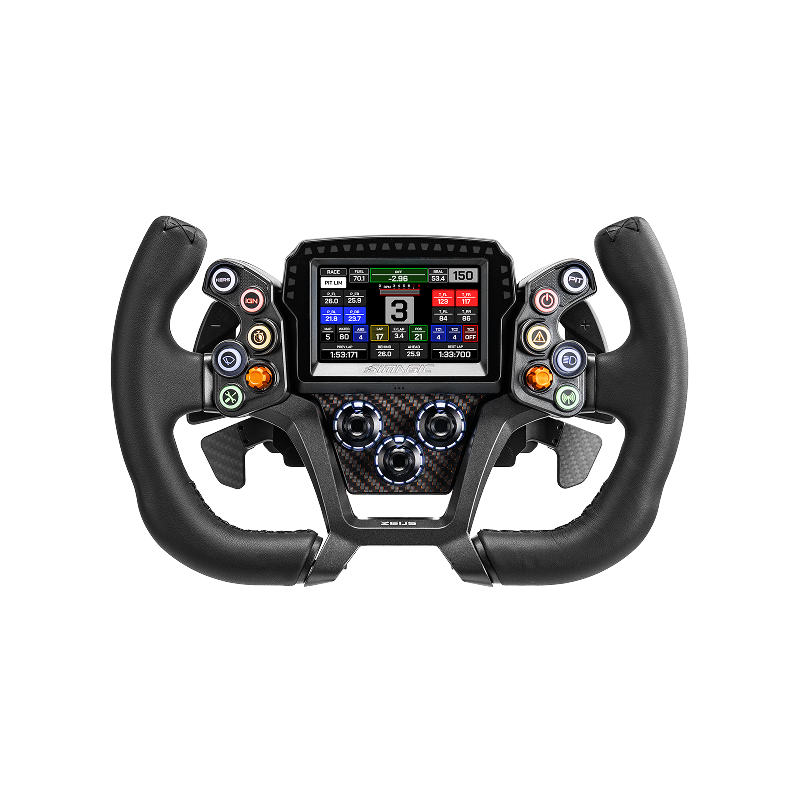
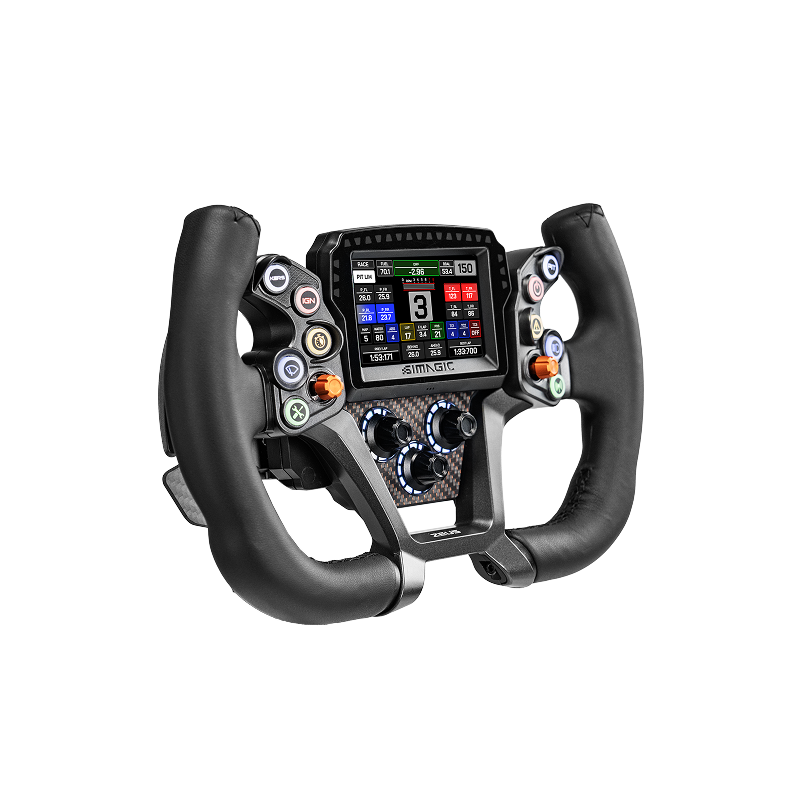
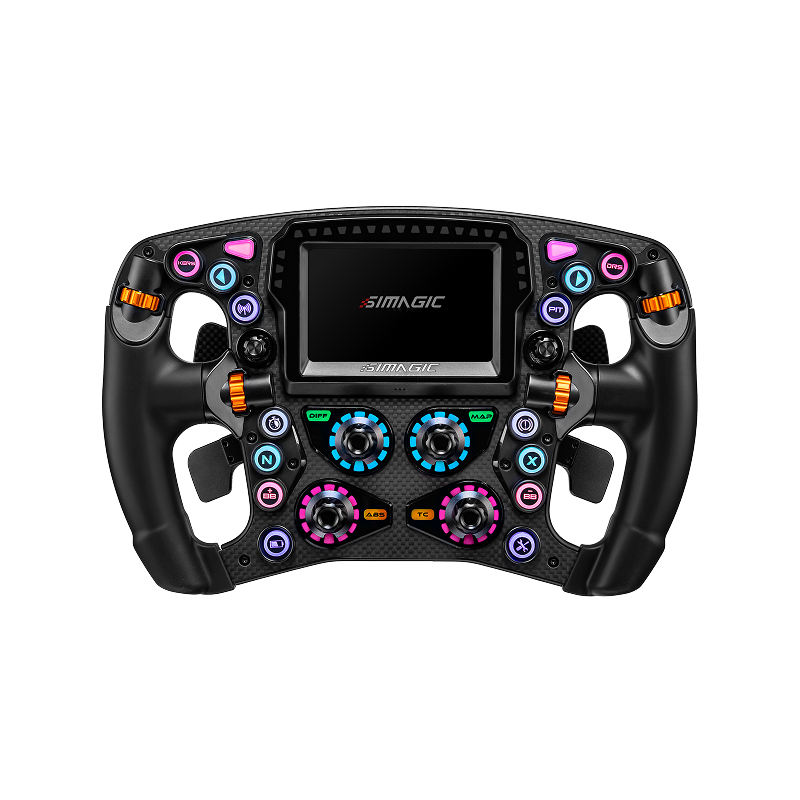
Formula-style wheels use an open top - the upper rim section is removed - which matches the driving position and hand placement of open-wheel racing cars. The compact shape puts controls closer together, which suits the faster input style of Formula or prototype racing.
If you primarily drive F1 titles, Formula cars in iRacing, or LMP-class prototype cars, a Formula wheel gives a more appropriate driving feel and control access.
|
→ Browse Formula Steering Wheels The Simagic FX-C is a compact Formula-style option for Simagic setups. The Simagic FX Pro offers additional controls and build quality for a step up. |
Round Steering Wheels
A round wheel gives a full rim with no flat section removed. This allows the driver to hold the wheel at any position - practical for rally driving where large, quick steering inputs are common, and useful for road car simulations or drift-focused titles. Round wheels are also a reasonable choice for mixed-discipline drivers who switch regularly between racing styles.
What Steering Wheel Size Is Right for Sim Racing?
Most sim racing steering wheels range from approximately 270mm to 350mm in diameter.
● Smaller wheels (270–300mm): Require more arm rotation per corner. Common in Formula and open-wheel setups. Suit drivers who prefer a sporty, direct feel.
● Larger wheels (320–350mm): Require less rotation for the same steering angle. More common in GT and endurance setups where a comfortable long-session feel matters more.
There is no universally correct size. If you have driven with a specific diameter before and found it comfortable, start there. If you are buying your first dedicated sim racing wheel, a size between 300–330mm suits the widest range of racing styles.
Check Compatibility Before Buying
|
⚠ Compatibility is where most steering wheel purchase mistakes happen. Before ordering, confirm your wheelbase brand and model, quick-release type, electrical connection, and whether an adapter is needed for cross-brand combinations. |
● Wheelbase brand and model: Simagic wheels are designed for Simagic wheelbases; Simucube wheels use Simucube's QR system. Cross-brand compatibility sometimes exists but requires adapters and may limit features.
● Quick-release type: Some wheels use proprietary quick-release systems. Others use universal patterns. Check what your wheelbase supports.
● Electrical connection: Button boxes, displays, and haptic features often rely on a data connection between wheel and base. Not all connections are compatible across brands.
● Adapter requirements: If you are combining brands, an adapter may be needed. This adds cost and can affect feature support.
Use the steering wheel compatibility guide to check whether a specific wheel works with your wheelbase. For quick-release adapters and related hardware, browse wheel accessories.
Which Features Actually Matter?
● Paddle shifters: Magnetic paddles are more durable and consistent than mechanical ones over time. Check whether the wheel uses magnetic or spring-loaded paddles.
● Button count: More buttons are only useful if you have functions to assign to them. Evaluate your sim title and hardware configuration - clutch bite, brake bias, TC, and ABS may only need 6–8 controls.
● Rotary encoders: Useful for adjusting settings while driving without taking your hands off the wheel. More common on GT and higher-end Formula wheels.
● Display: Some wheels include an integrated display for lap times, fuel, and system data. This requires a compatible data connection to the wheelbase.
● Build material: Aluminium hubs and CNC-machined components tend to offer more precise feel and longer durability than plastic alternatives.
For a detailed breakdown of GT, Formula, and rally wheel differences, the GT, Formula and Rally steering wheel comparison guide covers each type in depth.
How to Decide Which Racing Steering Wheel You Need
Use this framework before you browse products:
|
Your Situation |
What to Look For |
|
You mainly drive GT or endurance racing |
GT-style flat-bottom or D-shape wheel, 300 - 330mm, accessible button layout |
|
You mainly drive Formula or open-wheel |
Formula-style compact wheel with dense control layout |
|
You drive rally, drift, or mixed disciplines |
Round wheel with full rim for varied hand positions |
|
Compatibility is uncertain |
Check wheelbase brand and QR type first - then filter by compatible wheels |
|
You are upgrading from an existing wheel |
Identify what your current wheel lacks specifically before choosing a replacement |
|
You are buying your first sim racing wheel |
GT-style wheel at 300–330mm - suits the widest range of racing styles |
Explore Suitable Steering Wheels
Once you know the wheel type, size, and compatibility requirements that fit your setup, comparing specific products becomes straightforward. The sim racing steering wheels collection at Apex300 includes GT, Formula, and round options across a range of price points - from entry-level to professional.
|
→ Shop Sim Racing Steering Wheels at Apex300 GT, Formula, and round steering wheels from Simagic, Simucube, Cube Controls, Pokornyi Engineering, MOZA, Rexing, and VPG. Ships fast across Finland and Central Europe. |
For further guidance before making a decision: additional guidance on choosing a gaming steering wheel and the sim racing steering wheel buying guide both cover selection considerations in more detail.





Share:
Racing Cockpit Accessories: What They Are, What to Buy, and What to Skip
How to Choose the Best Pedal Set for Sim Racing: Features, Brands and Buying Guide