

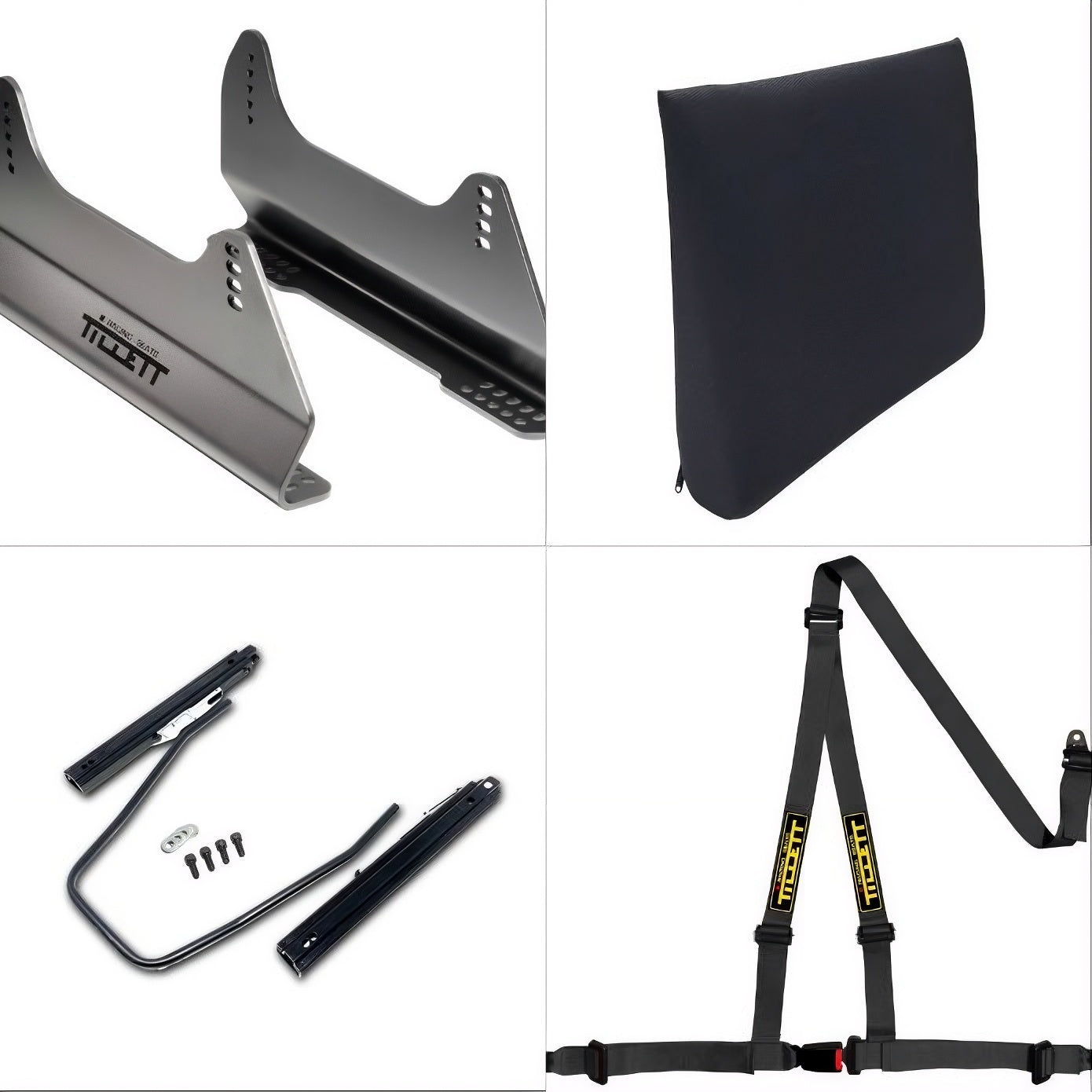
QUICK ANSWER: The seat accessories every sim racing cockpit needs are mounting brackets to attach the seat to the rig, seat sliders for fore-aft adjustment, and seat pads or lumbar support for longer sessions. Without brackets, a seat is not secure. Without sliders, your pedal reach is fixed. Apex300 stocks all three categories in the seat accessories collection for European buyers.

Why Sim Racing Seat Accessories Matter as Much as the Seat Itself
Buying a sim racing seat without the right accessories is like bolting a wheelbase to a desk without checking the mounting bolts. The seat is only as good as how it is attached and adjusted. A seat that moves under braking loads sends inconsistent signals through your body. A seat mounted at the wrong height or reach angle makes pedal input harder than it needs to be.
This is the part of sim rig building that most buyers skip in their first setup. They focus on the wheelbase, the pedals, and the cockpit frame. The seat and its accessories come last. In practice, the seat mounting position and adjustment range directly affect how precisely you can work the pedals and resist force feedback. Getting it right takes the right accessories.
What Is the Difference Between Seat Brackets and Seat Sliders?
Seat brackets, also called seat side mounts or seat mounting brackets, are the rigid connection between the seat shell and the cockpit profile rail. They hold the seat in place. Most aluminium sim rigs use profile rail systems where brackets bolt into the T-slot channels. The bracket type must match both the seat bolt pattern and the rig profile width.
Seat sliders, also called seat runners, sit between the seat bracket and the rig. They allow the seat to move forwards and backwards on a sliding track. This means you can adjust your reach to the pedal box and the steering wheel without removing the seat entirely. Seat adjustment through a slider takes seconds. Without a slider, any position change requires unbolting the full seat mounting.
Why Seat Mounting Rigidity Affects Force Feedback
In a direct drive sim racing cockpit, the wheelbase generates forces that travel through the wheel, your arms, and into your upper body. Your seat is the anchor point that holds your body against those forces. If the seat mounting allows any movement, flex, or rocking, your body compensates by tensing against it rather than feeling the road surface through the wheel. Rigid seat mounting via correct brackets transfers more feedback and reduces fatigue.
AT A GLANCE - SIM RACING SEAT ACCESSORIES BY TYPE
Use this table to identify which accessories your cockpit setup needs before buying.
|
Accessory |
Purpose |
Best For |
|
Seat Brackets and Side Mounts |
Attach the seat rigidly to the cockpit profile rail - prevent any movement under load |
All drivers - required for any seat on an aluminium rig |
|
Seat Sliders and Seat Runners |
Allow fore-aft adjustment of seating position without removing the seat from the rig |
Drivers who share a rig or need to fine-tune pedal reach |
|
Seat Pads and Lumbar Support |
Add comfort and back support for longer sessions - reduce posture fatigue |
Beginners and drivers doing endurance sessions over 60 minutes |
|
Racing Seat Covers and Harness Mounts |
Protect the seat shell and optionally add harness belt retention points for immersion |
Intermediate to pro drivers wanting motorsport feel in the sim |
Which Seat Accessories Does Apex300 Stock?
The Seat Accessories collection at Apex300 covers mounting hardware, seat sliders, and comfort accessories for sim racing cockpits. All items ship from the Finnish warehouse with EU VAT included. The range suits Sabelt, Sparco, and Artisans of Speed seats as well as most other fixed shell and reclinable sim racing chairs.
Seat Brackets and Side Mounts
Seat brackets at Apex300 are designed for aluminium profile cockpit frames. They cover standard seat bolt patterns and connect to T-slot profile rails. Before buying brackets, check both the bolt hole spacing on your seat shell and the profile width of your cockpit. Most Trak Racer and Sim-Lab frames use standard profile widths that are covered by the bracket range at Apex300.
Seat Sliders and Seat Runners
Seat sliders in the Apex300 range allow fore-aft movement along a defined track. They mount between the seat bracket and the rig. The travel distance varies by model. For drivers who share a rig, seat sliders are not optional. For solo drivers, they still allow fine adjustment of pedal reach without any tools. Seat runners also add a small amount of height from the rig base, which can help drivers who need a seat lowering kit effect by repositioning relative to the wheel.
Comfort Accessories: Seat Pads, Lumbar Support, and Harness
Seat pads sit inside the seat shell and add padding to the base and sides. They reduce pressure points on longer sessions. Lumbar support accessories attach to the seat back and hold the lower spine in a neutral position, which reduces back fatigue during sessions over 45 minutes. A harness or seat belt retention system adds shoulder and lap belt attachment points to a fixed shell seat, which increases immersion and prevents the driver sliding forward under hard braking.
Brands and Seat Compatibility at Apex300
-> Sabelt seat - compatible with standard side mount bracket patterns
-> Artisans of Speed seat - check bolt hole spacing before ordering sliders
-> Sparco sim seats - Grid Q and REV QRT use standard four-bolt seat patterns
-> Trak Racer and Sim-Lab frames - most bracket ranges fit standard profile widths
How to Choose the Best Sim Racing Seat Accessories for Your Rig
For Beginners: What to Buy First
If you are setting up your first sim racing cockpit, buy brackets first. Without the correct seat brackets, nothing else can be installed. Once the seat is securely mounted, add seat sliders if you are not certain of your final seating position. Seat pads and lumbar support can be added later once you have spent a few sessions in the rig and identified where discomfort occurs.
For Intermediate Drivers: Upgrading an Existing Setup
If your seat is already mounted but you want to improve comfort or seating precision, check the best sim racing seat accessories in the sim racing seat and seat accessories collections together. Replacing rigid mounts with a slider system often solves pedal reach problems without needing to change the seat itself. Adding lumbar support reduces session fatigue without any rig modification.
Seat Accessory Buying Order: What to Prioritise
-> Step 1: Seat brackets - secure the seat before anything else
-> Step 2: Seat sliders - add adjustment before you race in the rig
-> Step 3: Seat pads - add after first few sessions once you know your pressure points
-> Step 4: Lumbar support - essential for sessions over 45 minutes
-> Step 5: Harness or seat belt retention - for immersion and braking stability
How to Buy Sim Racing Seat Accessories at Apex300 in Europe
Apex300 ships seat accessories from Lohja, Finland. Dispatch takes 1 to 3 business days for in-stock items. EU delivery to Germany, Netherlands, Belgium, France, Finland, Poland and other countries takes 3 to 7 business days. All prices include EU VAT. Returns are accepted within 14 days on unused items in original packaging.
If you are also choosing a seat, read the guide on which sim racing seat should you buy before ordering accessories, as bracket type depends on the seat bolt pattern. For drivers building a first full rig, the
sim racing gear first setup guide covers the full order of what to buy and when.
Klarna payment plans are available at checkout. iDEAL Wero for Netherlands buyers. Bancontact for Belgium. BLIK for Poland. Klarna lets you split the cost when buying a seat and accessories together in one order.
Buying summary:
-> 1 to 3 day dispatch from Finland
-> 3 to 7 day EU delivery - Germany, Netherlands, Belgium, France, Finland and more
-> 14-day returns on unused items in original packaging
-> Klarna BNPL available - split cost for seat and accessories bundle
-> EU VAT included in all prices - no hidden charges at checkout
Frequently Asked Questions
Q1. What accessories do I need for a sim racing seat?
You need seat brackets to mount the seat, seat sliders for position adjustment, and seat pads for longer sessions. Lumbar support and harness mounts are optional upgrades. Brackets are required before anything else.
Q2. How do I mount a sim racing seat to a cockpit?
Fit seat side mount brackets to the cockpit profile rail using T-slot bolts. Align with the seat bolt holes and tighten securely. Check that the bracket type matches your rig profile width and your seat bolt pattern before ordering.
Q3. Which brackets fit a sim racing seat?
Bracket compatibility depends on your seat bolt hole spacing and your rig profile width. Most Sabelt, Sparco, and Artisans of Speed seats use standard four-bolt patterns. Check the product listing at Apex300 for compatibility details before buying.
Q4. Do sim racing seats need sliders?
Sliders are not required but strongly recommended. Without sliders, your seating position is fixed after mounting. Seat sliders let you adjust fore-aft reach to the pedal box and steering wheel in seconds without removing the seat.
Q5. How do sim racing seat sliders work?
Seat sliders mount between the seat bracket and the rig rail. The seat moves forward and backward along a sliding track. Most sliders have a lock mechanism that holds position during use. Release the lock, slide to position, and lock again.
Share:
What Is the Best Sim Racing Seat and How Do You Choose the Right One?
What Are Sim Racing Motion Systems and Are They Worth Buying?