

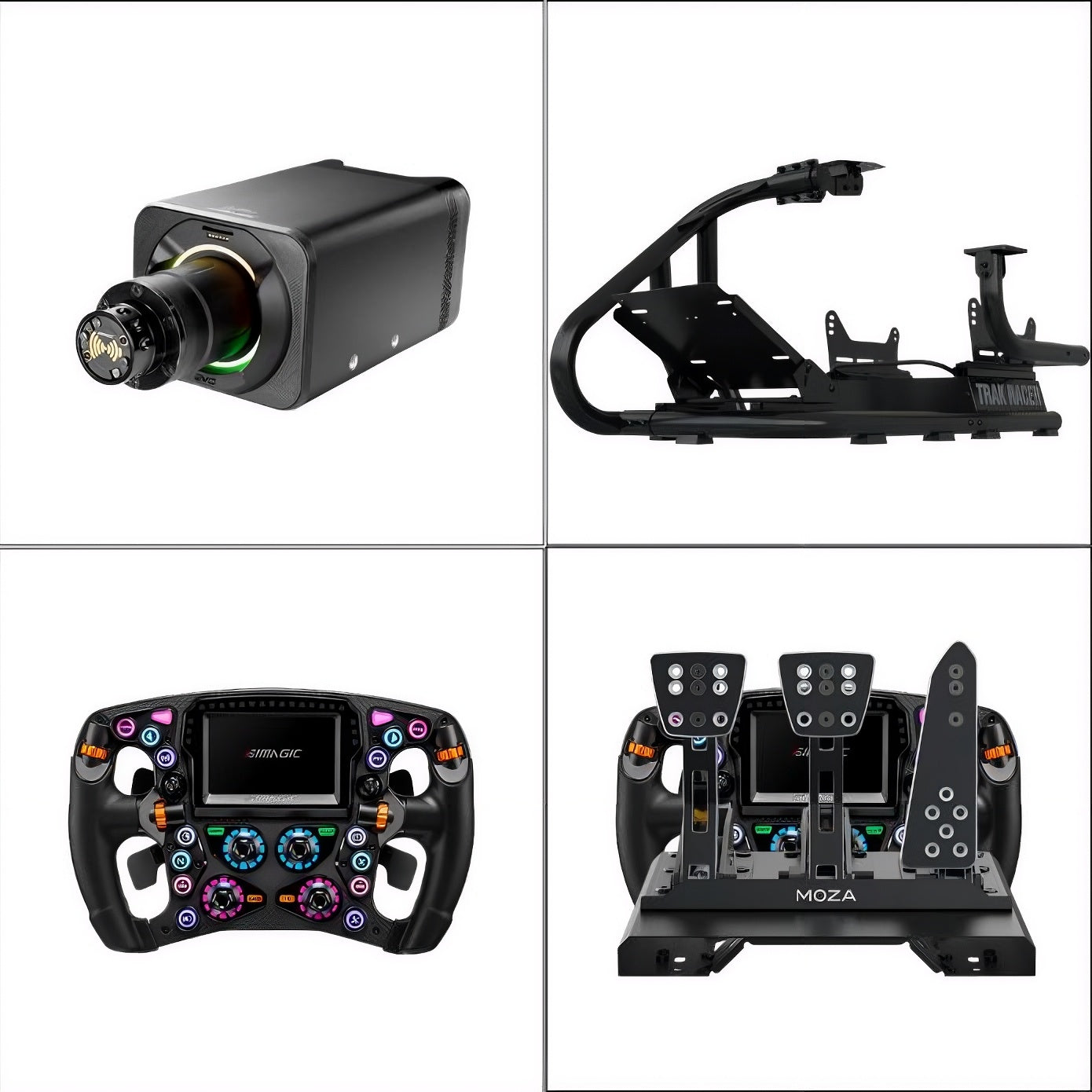
Quick Answer: Building a home sim racing setup means choosing four components in the right order: cockpits simracing first, then wheel bases, then steering wheel, then pedals. A stable cockpit prevents force feedback from being absorbed by flex. Direct drive wheel bases are the standard in 2026 at any level above beginner. You do not need all four at once. Most drivers start with three.

What Do You Actually Need to Start Sim Racing at Home?
A home sim racing setup runs on four components. Each one depends on the last. Getting the order right matters because it determines what works together and what you will want to upgrade first.
For a full breakdown of every component including wheel bases, steering wheels, pedals and cockpits simracing, the complete sim racing gear guide covers all four together with budget guidance for European buyers.
The Right Buy Order for Your First Sim Racing Setup
1. Cockpits Simracing. A stable cockpit frame is the foundation. Wheel base flex reduces force feedback accuracy. Pedal deck movement under hard braking causes inconsistent lap times. Aluminium profile cockpits simracing rigs remove both problems. If you start with a wheel stand, expect to feel the limitations within a few months of regular racing.
2. Wheel Bases. This is the motor that produces force feedback. Direct drive wheel bases connect the motor directly to the steering shaft with no belt or gears between them, giving faster and more accurate feedback. The Simagic Alpha EVO Sport 9 Nm is the direct drive wheel base starting point at Apex300.
3. Steering Wheel. Connects to the wheel base via a quick release (QR) system. Match the QR system to your base before buying. For a Simagic base, any Simagic Neo X or Zeus wheel connects natively without adapters.
4. Pedals. Load cell pedals measure brake force rather than pedal travel. Switching from potentiometer to load cell is the single upgrade that most improves lap times for beginner and intermediate drivers. Start with load cell from setup one.
What You Do Not Need at First
A home sim racing setup does not require a dedicated seat, triple monitors or a motion platform to work properly. A single monitor works. A seat adds comfort but does not affect lap times in the early stages. Add these when the core four components are solid.
Cockpits Simracing and Wheel Bases: Three Budget Levels
Every product below is available in the sim racings gear collection at Apex300. All prices include EU VAT.
|
Component |
Entry-Level |
Mid-Range |
High-End |
|
Cockpits Simracing |
Wheel stand or Sim-Lab GT1 EVO |
Trak Racer RS6 MK3 (€399) |
Sabelt S99 EVO I (€1,069) or Sim-Lab P1X Pro |
|
Wheel Bases |
Simagic Alpha EVO Sport 9 Nm (€499) |
Simagic Alpha EVO Pro 18 Nm |
Simagic Alpha EVO Ultra 28 Nm or Simucube 3 |
|
Steering Wheel |
Simagic Neo X GT or GT Pro Hub + rim |
Simagic Neo X 310G or Zeus Formula |
Pokornyi Engineering TGR-H or Cube Controls GT-X2 |
|
Pedals |
MOZA CRP Load Cell 3-Pedal Set (€249) |
Heusinkveld Sim Pedals Sprint |
Heusinkveld Sim Pedals Ultimate+ |
|
Total (approx.) |
€700 – €900 |
€1,800 – €2,400 |
€4,000+ |
Cockpits Simracing: Which Rig Type Do You Need?
The cockpits simracing category splits into two types: wheel stands and full aluminium profile rigs. The choice depends on torque level and how many hours per week you race.
Wheel Stand: Right for 9 Nm and Casual Use
A wheel stand holds a wheel base and pedal set without requiring a dedicated seat. If you race at a desk and want a stable platform for a Simagic Alpha EVO Sport 9 Nm, a wheel stand is the correct first step. It handles 9 Nm without significant flex and folds away between sessions.
Full Cockpit: Required Above 9 Nm
At 18 Nm and above, rig flex absorbs enough force feedback to affect feel and lap times. A full aluminium profile cockpit eliminates this. The Trak Racer RS6 MK3 at €399 is the starting point for proper cockpits simracing at Apex300. Steel frame, full wheel deck and pedal tray adjustability, and a seat mount that fits most racing bucket seats.
For a detailed comparison of cockpit options including Sabelt S99 and Trak Racer wheel stands, the best sim racing cockpits guide is the dedicated resource at Apex300.
Wheel Bases: Direct Drive vs Belt Drive in 2026
In 2026, direct drive wheel bases are the standard choice at every level above complete beginner. Direct drive connects the motor directly to the shaft with no belts or gears, giving faster force feedback response and more accurate signal reproduction.
Entry-Level Wheel Bases: Simagic Alpha EVO Sport 9 Nm
The Simagic Alpha EVO Sport 9 Nm at €499 is the direct drive starting point at Apex300. At 9 Nm, force feedback is strong enough to feel road texture, tyre slip and weight transfer clearly. It uses the QR-A quick release, which means any Simagic wheel connects natively without adapters.
Mid-Range and High-End Wheel Bases
Moving to the mid-range means stepping up to the Simagic Alpha EVO Pro at 18 Nm. At the high end, the Simagic Alpha EVO Ultra at 28 Nm or the Simucube 3 give maximum force feedback resolution. Browse the full wheel bases collection at Apex300 to compare Nm output, QR systems and current pricing.
What to Buy First When Budget Is Limited
Buy wheel bases and pedals first, then steering wheel, then cockpit. A direct drive wheel base on a desk shows you what force feedback is. Load cell pedals immediately improve your braking consistency. Neither requires a cockpit to work.
Most drivers add the full cockpit within three to six months once they know sim racing is a long-term habit. By then, you also know which discipline you race most and which upgrades make the most sense.
Ready to start? Browse sim racing bundles at Apex300 for complete matched setups at entry, mid-range and high-end levels.
For specific component picks at every budget tier, How to Build a Complete Sim Racing Setup in 2026 gives exact Apex300 product recommendations with step-by-step build order.
Not sure which pedals to add to your first cockpit and wheel base setup? The sim racing pedals guide compares Heusinkveld Sprint, Simagic P1000 and MOZA CRP side by side.
Choosing a steering wheel for your new wheel base? The sim racing steering wheels guide explains QR compatibility for Simagic, Simucube and MOZA before you buy.
Buying Cockpits Simracing and Wheel Bases from Apex300
All prices at Apex300 include VAT. Orders dispatch within 1 to 3 business days from the European warehouse. EU delivery takes 3 to 7 business days with full tracking. Returns accepted within 14 days on unused hardware in original packaging.
Building your first setup and not sure where to start? Speak to the Apex300 team. Describe what you are building and they will advise on compatible combinations. Replies within 24 hours on business days.
Frequently Asked Questions
Q1. What is the minimum I need to start sim racing at home?
A direct drive wheel base, a compatible steering wheel and load cell pedals. Cockpits simracing are useful but not essential at first. These three components give you proper force feedback and consistent braking to start with.
Q2. Do I need a full cockpit or will a wheel stand do for sim racing?
A wheel stand works at 9 Nm and for casual use. At 18 Nm or above, a wheel stand flexes enough to absorb force feedback and shift pedal position under hard braking. Full cockpits simracing rigs are needed at mid-range torque levels and above.
Q3. What Nm wheel base do I need to start sim racing?
9 Nm is the recommended starting point for first-time direct drive wheel bases. The Simagic Alpha EVO Sport at 9 Nm gives clear force feedback for road texture, tyre slip and weight transfer without being physically demanding over long stints.
Q4. How long does it take to assemble a sim racing cockpit at home?
Most aluminium profile cockpits simracing rigs take two to three hours to assemble on first build. Mounting the wheel base, pedals and screen adds another hour. Simagic and MOZA wheel bases are plug-and-play with driver software installed.
Q5. What sim racing setup does Apex300 recommend for a first European build?
Simagic Alpha EVO Sport 9 Nm wheel base, a Simagic Neo X GT steering wheel and MOZA CRP Load Cell pedals. This gives direct drive force feedback and load cell braking at a manageable starting budget, with every component individually upgradeable later.
Share:
Sim Racing Steering Wheels Explained: GT, Formula and Rally Wheels Compared