

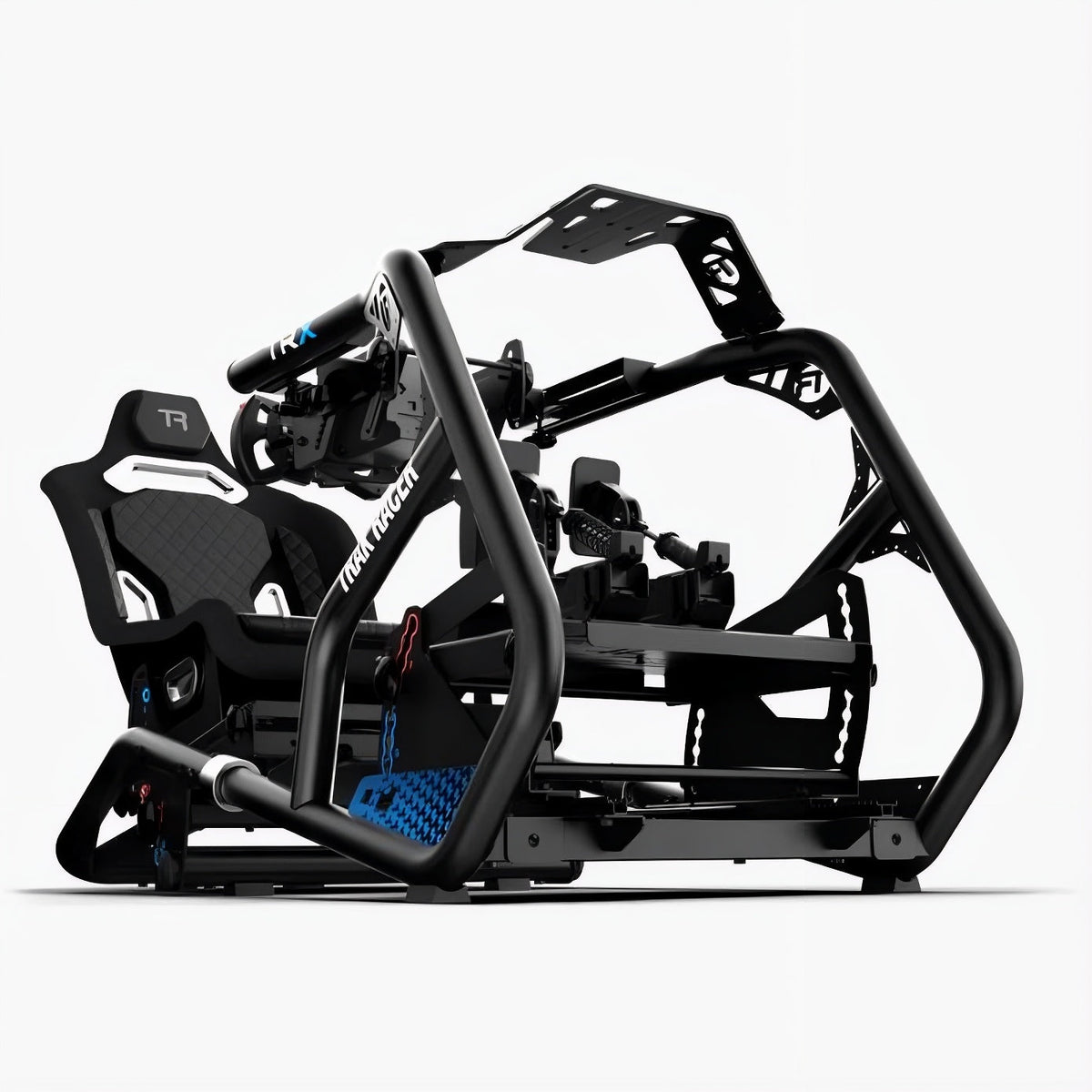
Quick Answer: A full sim racing setup can range from a relatively simple wheel-and-pedal arrangement on an existing desk to a dedicated cockpit with direct drive hardware, a seat, multiple displays and specialist accessories. Your real sim racing setup cost depends less on one fixed price and more on what hardware you already own, how much performance you want and how far you plan to upgrade.

That is why asking “How much does sim racing cost?” is really two questions: what do you need to start, and how complete do you want the setup to become?
If you already own a suitable PC or console, monitor and desk, you may only need the driving hardware. Someone building a dedicated rig from an empty room has a very different budget.
Comparing Sim Racing Setup Costs for Different Budgets
Instead of treating one number as the correct sim racing setup price, it is more useful to think in levels.
| Setup level | Typically includes | Main trade-off | Other costs to consider |
|---|---|---|---|
| Basic | Wheelbase or wheel system, steering wheel, pedals, existing desk/display | Lower cost and smaller footprint | Desk mounting, compatibility |
| Intermediate | Direct drive hardware, stronger pedals, wheel stand or cockpit | More space and mounting required | Seat, mounts, cables |
| Advanced | Higher-torque wheelbase, premium pedals, rigid cockpit, dedicated display | Significantly higher total investment | Seat, monitor system, accessories |
| Specialist | Advanced controls, multiple wheels, motion, premium displays | Cost grows quickly beyond core needs | Space, power, mounting and upgrades |
These are setup categories rather than fixed price promises. Hardware prices, bundles, promotions and availability change.
A current example shows why totals can vary so much. A single direct drive wheelbase may already represent several hundred euros before adding a wheel, pedals or mounting hardware.
The important question is therefore not simply, “What is the cheapest complete setup?” It is, “Which parts do I actually need to buy?”
What Sim Racing Equipment Do You Need?
A functional setup requires three things: driving controls, something to run the simulation and a way to see it.
Core driving equipment
The main hardware normally includes a wheelbase, a compatible steering wheel and pedals. Some entry-level products combine the wheel and wheelbase, while more advanced systems commonly sell them separately.
The wheelbase creates force feedback. The steering wheel gives you your main control interface, while the pedals control throttle and braking.
Compatibility matters here. A lower-priced component is not a saving if it requires an unexpected adapter, mount or replacement part to work with the rest of the setup.
Mounting solution
Your controls also need to be mounted securely. You may use an existing desk, a wheel stand or a dedicated cockpit.
A desk can keep the initial cost down, particularly when you are testing whether sim racing will become a long-term hobby.
A cockpit becomes more useful when hardware gets heavier, pedal forces increase or stronger force feedback makes a desk less practical.
Computer or console
Do not automatically include a new gaming PC in your sim racing budget. If your current computer or console supports the simulations and hardware you plan to use, it may cost nothing extra.
If it does not, computing hardware can become one of the largest additional expenses in the entire build.
Display
The same principle applies to the screen. An existing monitor or television can be enough to start. Ultrawide displays, triple-monitor configurations and VR can be considered later.
A complete sim racing setup does not have to mean buying every possible component from day one.
How Much Does Each Component Affect the Total Cost?
Different parts affect the budget in different ways.
| Component | Essential at the start? | Effect on total budget |
|---|---|---|
| Wheelbase | Yes | High |
| Steering wheel | Yes | Medium to high |
| Pedals | Yes | Medium to high |
| Desk mount / stand / cockpit | Yes in some form | Low to high |
| Seat | Depends on mounting solution | Low to medium |
| PC or console | Yes, if not already owned | Potentially very high |
| Display | Yes, but existing screen may work | Low to very high |
| Shifter / handbrake | No | Optional |
| Motion system | No | Very high optional upgrade |
This is why comparing two “complete” setups without checking what each includes can be misleading.
One setup price may cover only wheel, base and pedals. Another may include a cockpit, seat and mounting equipment. A third may count the PC and display as part of the total.
Always compare like with like.
What Should You Buy First for Sim Racing?
Start by checking what you already have. Then work through the purchase in this order:
- Choose your platform. Confirm whether you will race on PC or console and check hardware support.
- Set a maximum total budget. Include mounting and accessories, not only the wheelbase.
- Choose compatible driving controls. Wheelbase, wheel and pedals should work with your chosen platform and each other.
- Decide how you will mount them. Do not buy powerful hardware before confirming your desk, stand or cockpit can support it.
- Reuse existing equipment where sensible. Your monitor, PC, headphones, desk or seat may already be adequate.
- Leave optional upgrades until later. Shifters, handbrakes, extra wheels, premium displays and motion systems are easier to choose once you know what type of racing you enjoy.
If you are planning your first system, Apex300's first sim racing setup guide provides more detail on choosing the individual components.
Is a Sim Racing Rig Worth It?
A dedicated cockpit can be worth the cost, but it is not a requirement for every beginner.
A desk setup costs less and takes up little additional space. It is useful for discovering whether you enjoy sim racing enough to invest further.
A wheel stand provides a middle ground. It gives your wheel and pedals their own mounting platform while remaining easier to store than many full cockpits.
A dedicated cockpit makes more sense when you want greater rigidity, a consistent seating position and permanent mounting.
The right choice depends on space and hardware as much as budget. Buying a large cockpit for a setup that must be packed away after every session may create more inconvenience than benefit.
Other Costs to Consider
Small purchases can quietly increase the final bill. Before ordering, check whether you also need:
- wheel or pedal mounting hardware
- quick-release components or adapters
- seat brackets and sliders
- monitor mounts
- USB hubs or extension cables
- power connections
- shipping
- software or simulation subscriptions
- replacement wheels for different racing disciplines
Check what is already included before adding these items separately. This is especially important with bundles, where some components or mounting parts may already be supplied.
Final Budget Checklist
Before deciding your final sim racing setup cost, answer five questions:
- What equipment do I already own?
- Which components are essential for the racing I want to do?
- Are all components compatible?
- Can my mounting solution support them?
- Which upgrades can wait until later?
Once you know those answers, browsing the sim racing gear collection becomes much more useful because you can compare products against a defined requirement rather than simply choosing the most expensive specification.
A good setup budget is not the one that buys the most equipment. It is the one that gets the essential parts working together without paying for features you will not use.


Share:
Best Sim Racing Wheelbase in 2026: How to Choose the Right One
Sim Racing Cockpit Compatibility: How to Match Your Wheelbase, Pedals and Seat